





When fans witness a world record or a championship, they see the outcome of years of preparation distilled into a single moment. What they do not see is the body of knowledge behind that performance: i.e., research, coaching, technical analysis, and other contributions that help athletes train better, recover faster, and compete more safely.
As World IP Day 2026 highlights “IP and Sports: Ready, Set, Innovate,” it is worth looking beyond the scoreboard to the information infrastructure that drives sports today. While patents, trademarks, and broadcast rights dominate discussions about intellectual property in athletics, copyrighted works also play a significant role in progress.
Athletes, coaches, and trainers rely on a wide range of content to shape decisions about performance, safety, preparation, and recovery.

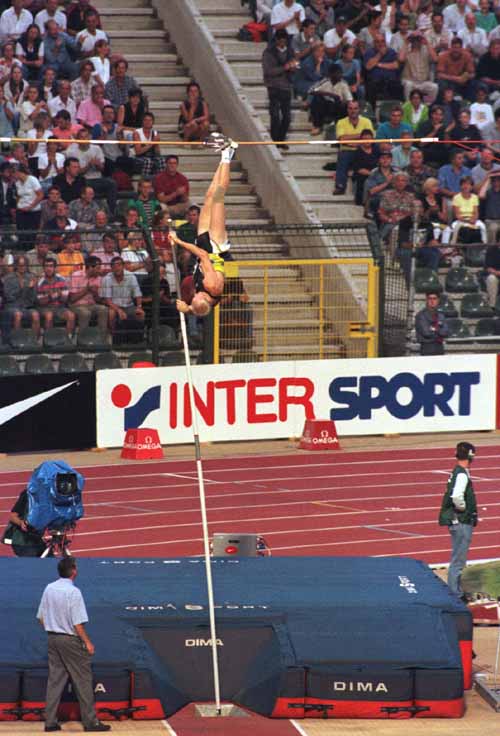
From personal experience, I know that the smallest margins often decide elite sport. As a former pole vaulter for Great Britain who was selected for the 1992 Olympics and held the British Junior pole vault record, I spent more than a decade competing internationally and experienced firsthand how performance depends not only on talent and training, but also on access to trusted information. At this level, trusted content – from technical analysis and coaching materials to sports science and recovery research – aids athletes in refining techniques, learning from performance, and making better decisions under pressure.
Copyright helps make that ecosystem possible. It supports the creation of high-value professional content by giving creators exclusive rights to their works and determine how their work is shared and reused.
Consider just a few examples. A coach may want to circulate excerpts from a training guide across a development program. A performance team may need to share research articles internally across departments. A federation may incorporate third-party diagrams, standards, or publications into training resources for coaches.
When organizations have the right permissions in place, they can collaborate with greater confidence and put research into practice. This is imperative in an increasingly multidisciplinary sports environment. Today’s performance extends far beyond the field of play, involving coaches, physiotherapists, sports scientists, legal teams, governing bodies, academic institutions, equipment manufacturers, and media professionals. Respect for copyright helps these stakeholders collaborate more effectively by providing a framework for lawful access, reuse, and exchange of information.
It also reinforces trust. In high-performance sport, decisions about training load, rehabilitation, technique, and safety should be informed by reliable sources, not incomplete excerpts or materials of uncertain origin.
For fans, the connection may not always be obvious. The athletes deserve full credit for their extraordinary talents and world-class performances. But behind every breakthrough in sport is work supported by other individuals: a researcher, an author, a publisher, an analyst, a videographer, a clinician, an educator, or a governing body. Their contributions may not stand on the podium, but they help make the win possible.
Sport celebrates the achievements we can see, in the stands or on television. Intellectual property reminds us to value the invisible infrastructure behind it, as well.