





Medical affairs professionals know there is no shortage of AI initiatives in the enterprise today. It’s becoming increasingly common to see mandates requiring that new projects must have an AI component in order to compete effectively for resourcing, and even quantitative assessments of AI use and competency through AI scorecards.
However, it’s still a reality that the majority of AI projects fail, so how can medical affairs leaders block out the noise and identify workflows where AI can actually produce better outcomes? Here are three examples of how medical affairs teams are using AI today:
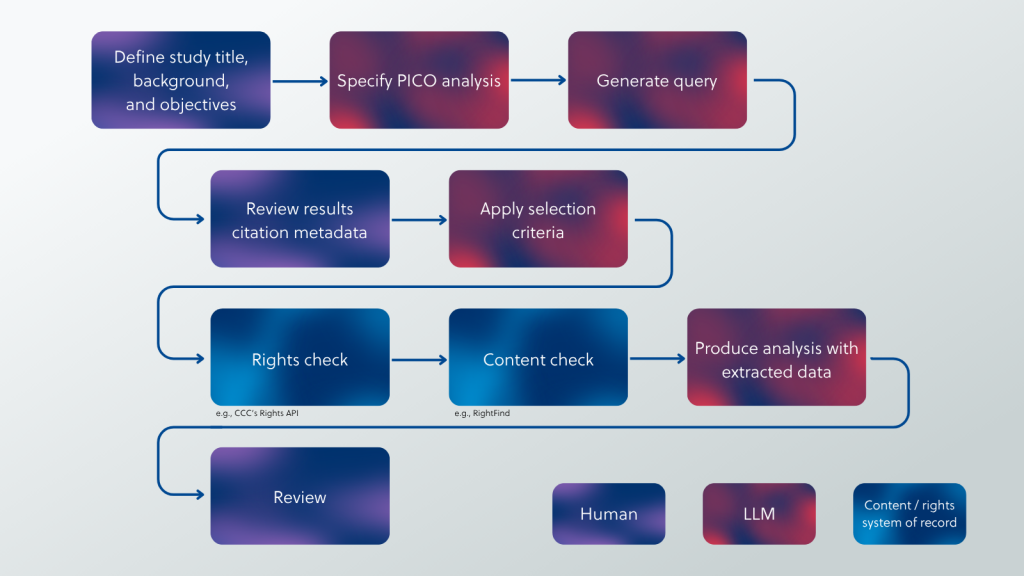
1. AI-Assisted Literature Review
Literature review can be a lengthy, manual process. By introducing AI assistance, the level of effort is reduced, unlocking the information gain of comprehensive literature review for more business decisions.
Key considerations in this workflow are trust and responsibility. Literature review is so powerful because it is the most thorough and trusted method known to survey the literature and identify existing knowledge. To retain those benefits, AI-assisted literature review must:
- Ensure humans fulfill a significant role at the helm of the workflow, both defining the background and objectives of the study, and intervening at critical junctures to inspect the system’s output and course correct.
- Rely on trusted sources of literature, with the appropriate rights for AI interrogation.
2. AI-Assisted Summarization and Response Generation
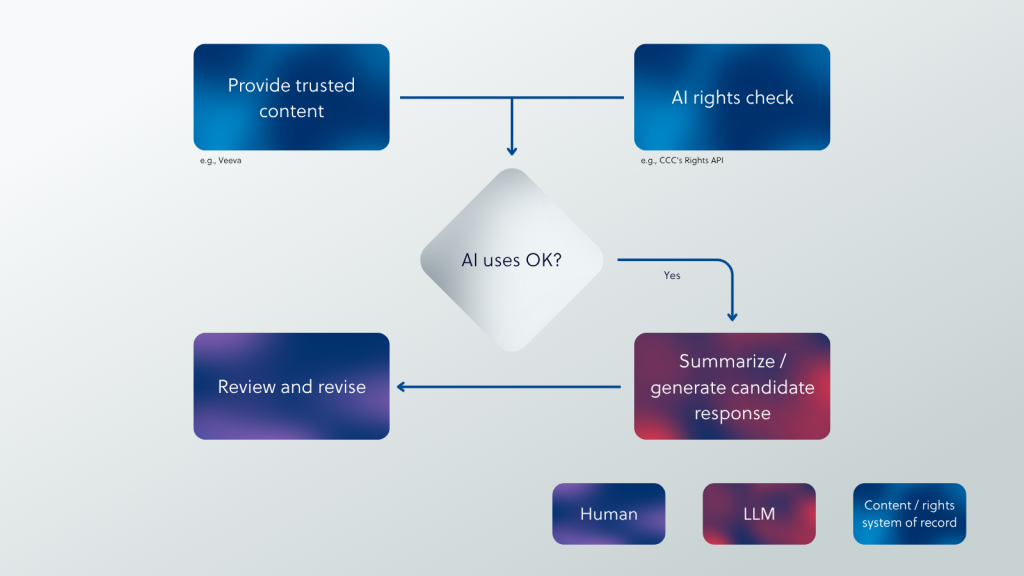
Key product details are often locked within full-text narratives. AI systems can help by extracting and highlighting these details, speeding creation of summaries and responses that humans can review and complete to ensure HCPs and other stakeholders receive critical information.
An important consideration in this workflow is data quality. Oftentimes, we observe that the systems medical affairs professionals rely on for their day-to-day work, although critical for their workflow and governance, have poor data quality as it pertains to published bibliographic metadata. These records usually exhibit incomplete data, and lack of consistent access to full text.
As a result, AI systems that are asked to review both your internal materials and the external published literature will suffer from “blind spots.” It is important in these cases to spend the time to clean up your data, so the AI workflow has the intended outcome.
3. AI Chat with Trusted Sourcing
AI-assisted chat can be helpful in pointing users to the most relevant source material. A
system that can take advantage of generative AI’s natural language interface, while signposting the user to validate and verify the information, can improve efficiency. Imagine an internal chatbot able to direct your team to the best authoritative literature on your products, improving efficiency while also enhancing consistency. The key consideration here is verifiability: the team needs to be able to trace any chat response back to its source.
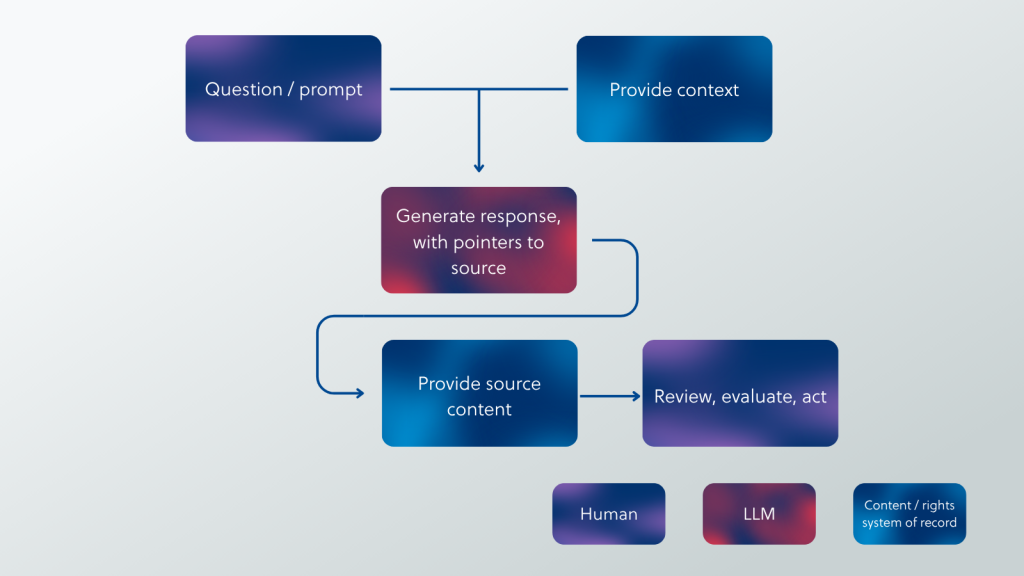
In workflows like these, ease of use is a key factor, and it means more than just how quickly the system comes up with an answer. To ensure that your team validates what the AI system is telling them, you need a streamlined process for them to be able to access the underlying materials and be directed to the supporting references.
Put more simply: A human needs to be able to validate the AI narrative in as few “clicks” as possible!